Dr Debby Banham
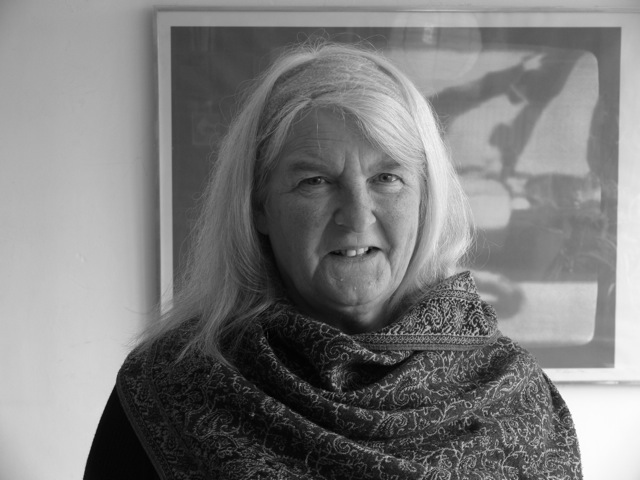
Affiliated lecturer in the Department of Anglo-Saxon, Norse and Celtic
Life Member of Newnham College
Contact Information
Department of ASNC, Faculty of English, 9 West Road, Cambridge CB3 9DP
(+44-1223-335079)
Email: db116@hermes.cam.ac.uk
Departmental and College Responsibilities
Affiliated lecturer in the Department of Anglo-Saxon, Norse and Celtic
Life Member of Newnham College
Academic Interests
Social, cultural and intellectual history, especially medicine, diet and farming, with a sideline in monastic sign language
Dr Banham is currently editing Bald's Leechbook, the oldest medical collection in the English language, and its companion text Leechbook III with Dr Christine Voth for the Dumbarton Oaks Medieval Library. She is also collaborating on the Early English Bread research project with Professor Martha Bayless of the University of Oregon, funded by a grant from the American Council of Learned Societies.
Selected Publications
ed., with Claire Burridge and Lea Olsan, Early Medieval Medicine in Context: Transmission, Translation and Transformation, York Medieval Press, 2025
with Christine Voth, ‘The beginnings of English medicine: Confluences and cross-currents in Bald’s Leechbook and Leechbook III’, in Banham, Claire Burridge and Lea Olsan, ed., Early Medieval Medicine in Context: Transmission, Translation and Transformation, York Medieval Press, 2025, pp. 47–72
‘Ymbhwyrft: the farming year in early England’, in Landscapes and Producers in Medieval England: Essays presented to Rosamond Faith, ed. Richard Purkiss and Hannah Boston, Studies in Regional and Local History 23, University of Hertfordshire Press, 2025, pp. 193–211
‘Did the Lady of the Mercians Make Her Own Bread? Gender, Status, and Food Production in Early Medieval England’ in Rebecca Hardie, ed., Æthelflæd, Lady of the Mercians, and Women in Tenth-Century England, De Gruyter, 2023, pp. 165–86
‘The earliest English culinary recipes: Dietary advice in Old English medical texts’, Journal of Medieval History 49, 2023, 711–24
‘Æfric’s Nomina herbarum and the plant remains from Anglo-Saxon Winchester’, in Martin Biddle, Jane Renfrew and Patrick Ottaway, ed., Environment and Agriculture of Early Winchester, Winchester Studies 10, Archaeopress Publishing, 2022, pp. 39–56
'From field to feast: the life (and afterlife) course of cereal crops in early medieval England’, in Thijs Porck and Harriet Soper, ed., Early Medieval English Life Courses, Brill, 2022, pp. 287–318
‘The global triumph of bread wheat: the role of early medieval England’, in Karen Louise Jolly and Britton Elliot Brooks, ed., Global Perspectives on Early Medieval England, Anglo-Saxon Studies 44, Boydell, 2022, pp. 19–33
‘Plant remains from B series samples in trench XXI’ and ‘Plant remains from various contexts from the 10th/11th century onwards’, in H. R. Hurst with L. F. Pitts and A.V. Saunders, Gloucester: The Roman Forum and Post-Roman Sequence at the City Centre, Gloucester Archaeological Publications, 2020, pp. 76–7 and 151–4
‘Insular agricultures: comparisons, contrasts, connections’, in England, Ireland and the Insular World: Textual and Material Connections in the Early Middle Ages, ed. Mary Clayton, Alice Jorgenson and Juliet Mullins, Arizona Center for Medieval and Renaissance Studies, pp. 29–40, 2017
with Christine Voth, ‘The diagnosis and treatment of wounds in the Old English medical collections: Anglo-Saxon surgery?’ in Larissa Tracy and Kelly DeVries, eds, Wounds and Wound Repair in Medieval Culture, Brill, pp. 153–74, 2015
‘The Old English monastic sign language’, in Julie Bakken Jepson, Goedele De Clerck, Sam Lutalo-Kiingi and William B. McGregor, eds, Sign Languages of the World: A Comparative Handbook, De Gruyter Mouton and Ishara Press, pp. 901–10, 2015
‘Medicine at Bury in the time of Abbot Baldwin’, in Tom Licence, ed., Bury St Edmunds and the Norman Conquest, Boydell, pp. 226–46, 2014
with Rosamond Faith, Anglo-Saxon Farms and Farming, Oxford University Press, 2014
‘Lectun and orceard: a preliminary survey of the evidence for horticulture in Anglo-Saxon England’, in Gale R. Owen-Crocker and Brian W. Schneider, eds, The Anglo-Saxons: The World through their Eyes, BAR British Series 595, Archaeopress, pp. 33–48, 2014
‘Animal husbandry’, in Michael Lapidge et al., eds, The Wiley Blackwell Encyclopedia of Anglo-Saxon England, pp. 40–2, 2013
‘Sign language’, in Gale Owen-Crocker, Elizabeth Coatsworth and Maria Hayward, eds, Encyclopaedia of Medieval Dress and Textiles of the British Isles, c. 450–1450, Brill, pp. 514–15, 2012
‘”To keep silence following the Rule’s command”: Bishop Æthelwold, reforming ideology and communication by signs’, in Alexander R. Rumble, ed., Leaders of the Anglo-Saxon Church: from Bede to Stigand, Boydell, pp. 129–45, 2012
‘Dun, Oxa, and Pliny the great physician: attribution and authority in Old English medical texts’, Social History of Medicine1, 57–73, 2011
‘England joins the medical mainstream: new texts in eleventh-century manuscripts’, in Hans Sauer and Joannna Storey, eds, Anglo-Saxon England and the Continent, Arizona Center for Medieval and Renaissance Studies, pp. 341–52, 2011
with Conan T. Doyle, ‘An instrument of confusion: The mystery of the Anglo-Saxon syringe’, in Jennifer Rampling et al., eds, Recipes for Disaster, Whipple Museum, Cambridge, pp. 27–38, 2010
‘In the sweat of thy brow shalt thou eat bread’: cereals and cereal production in the Anglo-Saxon landscape’, in Nicholas J. Higham and Martin J. Ryan, eds, The Landscape Archaeology of Anglo-Saxon England, The Boydell Press, pp. 175–92, 2010
‘The staff of life: cross and blessings in Anglo-Saxon cereal production’, in Sarah Larratt Keefer, Karen Louise Jolly and Catherine E. Karkov, eds, Cross and Cruciform in the Anglo-Saxon World: Studies to honor the Memory of Timothy Reuter, Medieval European Studies XI, West Virginia University Press, pp. 279–318, 2010
‘Race and tillage: Scandinavian influence on Anglo-Saxon agriculture?’ in Matti Kilpiö et al., eds, The Anglo-Saxons and the North, Arizona Center for Medieval and Renaissance Studies, pp. 165–92, 2009
‘The Old English Nine Herbs Charm’, in Miri Rubin (ed.) Medieval Christianity in Practice, Princeton University Press, pp. 189–93, 2009
‘”The very useful and very accessible skill of bending the fingers”: finger counting from Bede’s De temporum ratione’, in Anke Timmermann et al., eds, The Body as Instrument, Department of History and Philosophy of Science, University of Cambridge, pp. 8–16, 2006
‘A millennium in medicine? New medical texts and ideas in England in the eleventh century’, in Simon Keynes and Alfred P. Smyth, eds, Anglo-Saxons: Studies presented to Cyril Roy Hart, Four Courts Press, pp. 230–242, 2006
‘Arestolobius, the Patriarch of Jerusalem and bark that comes from Paradise: What did the Orient mean to the compilers of Old English medical collections?’ in Nil Sari et al., eds, Proceedings of the 38th International Congress on the History of Medicine, International Society for the History of Medicine, pp. 459–468, 2005
Food and Drink in Anglo-Saxon England, Tempus, 2004
‘Be hlafum and wyrtum: food plants in Anglo-Saxon society and economy’, in C. P. Biggam, ed., From Earth to Art: the Study of Anglo-Saxon Plants, Rodopi, pp. 119–31, 2003
‘Investigating the Anglo-Saxon materia medica: Latin, Old English and archaeobotany’, in Robert Arnott, ed., The Archaeology of Medicine, BAR International Series 1046, Archaeopress, pp. 95–9, 2002
with Laura Mason, ‘Confectionery recipes from a fifteenth-century manuscript’, Petits propos culinaires 69, 45–69, 2002
‘Food and drink’, in Michael Lapidge, et al., eds, The Blackwell Encyclopaedia of Anglo-Saxon England, Blackwell, pp. 190–1, and ‘Monasterialia indicia’, ibid., pp. 319–20, 1999
‘Anglo-Saxon attitudes: in search of the origins of English racism’, European Review of History2, 143–56, 1994
Monasteriales indicia: The Old English Monastic Sign Language, Anglo-Saxon Books, 1991 (rev. ed. 1996)