About Icelandic at Cambridge
Why Modern Icelandic?
Modern Icelandic, a relative of the Scandinavian languages, is of particular interest to students of Old Norse as its grammar has remained virtually unchanged since the thirteenth century when many of the famous medieval sagas were composed. The vocabulary is also highly conservative since the Icelanders largely eschew loanwords, preferring to create new words from native elements. Yet despite its archaic features, the language is triumphantly alive today: as the national language of Iceland’s 340,000 inhabitants, it plays a fundamental 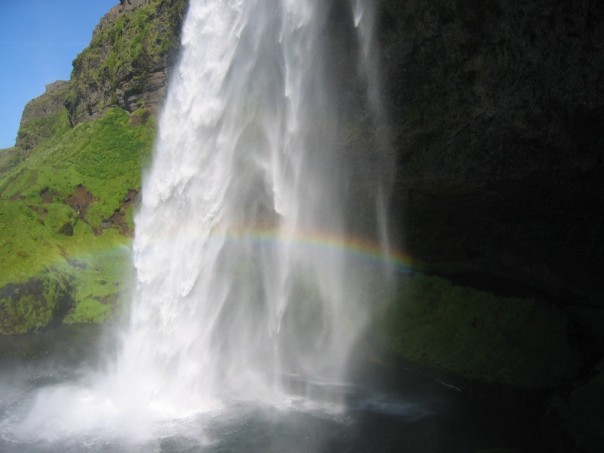 role in the country’s vibrant culture, featuring in books, newspapers, films and music, as well as having a strong presence on the internet.
Icelandic classes in Cambridge
Some students choose to learn Icelandic to support their Old Norse studies, others because they are fascinated by languages, interested in modern Icelandic culture or wish to visit the country and use the language for practical purposes. To cater for these different interests, we aim to strike a balance in the classes between teaching grammar and providing practice in speaking, listening and reading, as well as introducing students to aspects of Icelandic culture.
About the Teacher
Ragnhildur Anna Kjartansdóttir (teacher for Michaelmas and Lent 2026-27) is an MPhil student in Economic and Social History at the University of Cambridge, emphasising on Iceland.
Prior to her current studies, Ragnhildur studied at the University of Iceland. She has experience working as a teacher in elementary school and as a substitute teacher in high school.
To contact Ragnhildur, please email rak69@cam.ac.uk
Sólveig Hilmarsdóttir (occasional substitute teacher) is an Icelandic PhD student in Classics at the University of Cambridge. Her PhD project focuses on the relationship between language and social status in ancient Rome. For further information, see her faculty webpage and her Gates Cambridge biography.